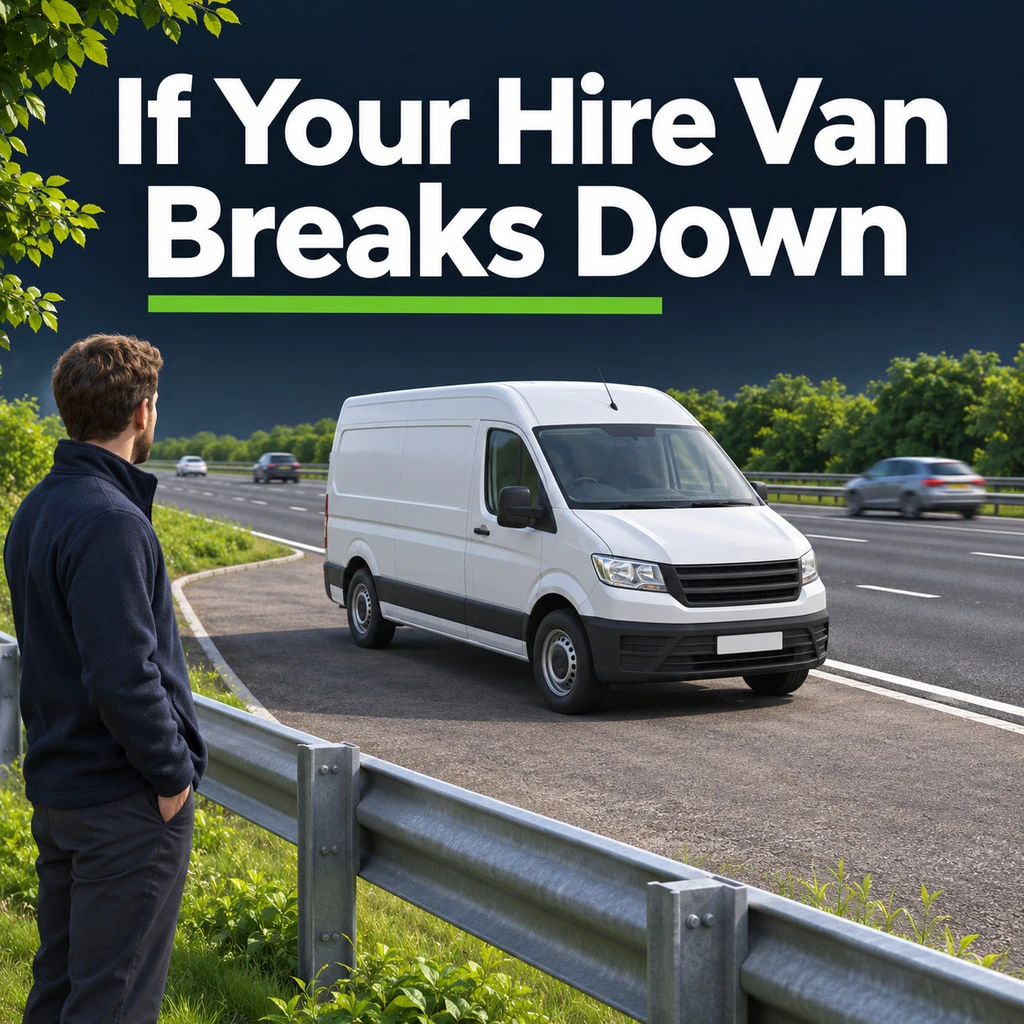
A hire-van breakdown has two parts: protecting people and arranging assistance. Deal with the first before the second. The office number, a delivery deadline and the return time should never take priority over an unsafe stopping position.
Read the Highway Code’s breakdown rules before travelling. The guidance below separates emergency action from the information needed to manage the hire afterwards.
On a motorway: get safe before making routine calls
If possible, leave at the next exit or reach a service area. Otherwise move left to an emergency area or hard shoulder, stop as far left as possible and use hazard lights. Only leave through the side away from traffic when it is safe, and wait well away from the vehicle and traffic, behind a barrier where available.
Do not put a warning triangle on a motorway or attempt repairs there. If safe exit is not possible, follow the emergency instruction above. People with a disability preventing safe exit should remain belted in, use hazards and call 999 for the police.
National Highways’ motorway guidance explains the safety sequence and ways to identify your location. Follow instructions from the emergency services or traffic officers. Do not return to the vehicle merely to retrieve the hire paperwork.
Once safe, use the assistance details supplied with the hire
Contact the assistance service specified in the agreement. Do not assume a personal breakdown policy covers the hired van, its business use or its dimensions. The general QVH office contact is not a substitute for emergency services or the correct out-of-hours assistance process.
If an emergency operator has given instructions, explain that to the recovery provider. Keep the hire team informed once safe, but do not delay an emergency call while trying to reach the depot.
What information will assistance need?
| Information | Why it helps |
|---|---|
| Exact location | Road, direction, nearby junction or a driver-location sign; do not walk into danger to find one. |
| People and safety | Number of people, whether safe exit is possible and any accessibility needs. |
| Vehicle | Registration, van type, hire reference and relevant height or weight information if known. |
| Symptoms | What happened, warnings seen and whether the engine is off; do not guess a diagnosis. |
| Load | Whether goods, tools or anything requiring special handling are on board. |
| Contact | A working phone number and enough battery to receive updates. |
If a detail is not available safely, say so. Do not climb into the load area, stand behind the van in traffic or search for a label at the roadside just to complete the list. The safety of the people present determines what can wait.
Vehicle recovery, the load and a replacement are separate questions
| Question | What to establish |
|---|---|
| Where will the van go? | The recovery destination and how the hire team will be notified. |
| What happens to the occupants? | Safe onward arrangements and any accessibility requirements. |
| What happens to the goods? | Whether recovery can carry the loaded vehicle and whether separate handling is needed. |
| Is another vehicle available? | Whether a replacement is included, suitable and available under this agreement. |
| What can I authorise? | Who approves repairs, recovery changes or costs before arrangements are made. |
| What happens to the return? | How the hire status, keys and paperwork will be handled afterwards. |
Do not arrange repairs or a replacement hire on the assumption that QVH will reimburse the cost. Get appropriate authorisation under the agreement. Likewise, assistance with the vehicle does not automatically insure tools or pay for a missed business appointment.
Example: a loaded van cannot finish its route
A driver breaks down with stock on board and several stops remaining. Once people are safe, assistance needs to know the vehicle is loaded. The business also needs someone to contact customers and consider the goods, while QVH and the assistance provider agree the vehicle arrangements.
Keeping those tasks separate helps prevent a rushed, unsafe transfer on the roadside. Do not unload in a dangerous position or ask another driver to stop where they would create a second hazard. Any transfer needs a suitable safe location and handling plan.
Keep a factual incident record
When safe, record the time, location, symptoms, call references and instructions received. Keep receipts for any authorised expenditure and note who approved it. Photographs can help only when they can be taken without returning to danger.
If the problem involves a collision, injury, theft or another incident, follow the relevant emergency and reporting requirements as well as the hire procedure. Do not assume an ordinary breakdown call completes every necessary report.
Before the next journey, save the right contacts
At collection, ask how support applies to the actual booking, including out-of-hours contact and any load or replacement limitations. For business packages, QVH’s fleet services and fleet van hire explain the services to discuss; the agreement confirms the arrangements for your hire.
Use the daily-check guide to spot and report concerns before setting off. It cannot prevent every breakdown, but it gives the driver and hire team a clearer starting point.
Frequently asked questions
No. In immediate danger, call the emergency services first. On a motorway where you cannot reach safety or leave the vehicle safely, remain belted in with hazards on and call 999 for the police.
No. Never use a warning triangle on a motorway. Follow the Highway Code and emergency instructions rather than walking back along the carriageway.
Do not assume so. Use the assistance arrangements supplied with the hire and check any separate policy before relying on it.
Confirm the actual agreement and current arrangements with QVH. Suitability, availability and the terms matter; do not assume an immediate replacement or an identical vehicle.
Not necessarily. Tell assistance what is on board and ask how the vehicle, goods and occupants will be handled. Do not attempt an unsafe roadside transfer.