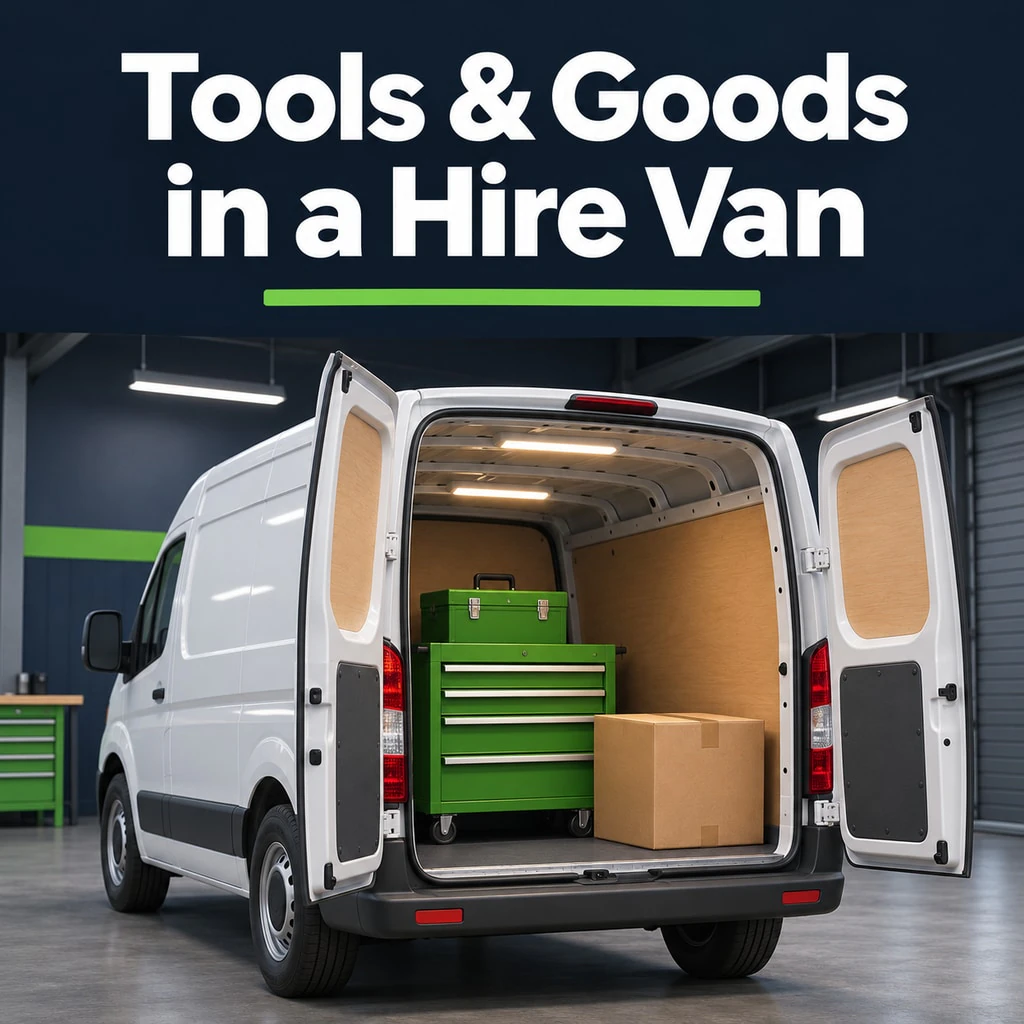
Do not assume that cover for a hire van also covers tools, stock or customers’ goods carried inside it. The vehicle, the load and liability to other people are separate questions. Start by describing what you will carry and asking the relevant insurer or broker how the actual policies respond.
This guide helps you prepare those questions. It does not recommend an insurance product or decide whether your cover is suitable. The policy wording, schedule, endorsements and the facts of the journey determine the position.
Which part of the risk are you checking?
| Risk or item | Question for the relevant provider | Do not assume |
|---|---|---|
| Damage to the hired van | What liability, excess and exclusions apply under the hire agreement? | That cover for the vehicle includes its contents. |
| Your tools and equipment | Are these items covered in a temporary hired vehicle, including theft conditions? | That “business use” automatically insures every tool. |
| Stock or materials | Does the policy cover these goods during the intended journey and handling? | That a tools policy treats all stock as tools. |
| Customer-owned goods | Is carrying someone else’s property within the insured activity? | That cover for your own goods extends to customers’ possessions. |
| Liability to other people | What liability cover is relevant to the work and loading activity? | That public liability replaces insurance for the goods themselves. |
| Lost working time | Is any interruption or replacement-equipment cover relevant? | That replacing the van automatically pays for a missed job. |
Keep the vehicle question separate using QVH’s van-hire insurance and excess guide. For the load, use the terms of the policy that actually covers the items. Neither this guide nor a rental quote can rewrite those terms.
Describe the goods precisely
Prepare an inventory with ownership, replacement values, serial numbers where available and the maximum amount travelling together. A vague description such as “a few tools” can hide a much larger exposure once batteries, specialist instruments, hired equipment and stock are included.
Tell the insurer whether the vehicle is temporarily hired, what work it will do and whether anyone else’s property is involved. Ask whether an additional or replacement vehicle needs to be notified. Do not assume the registration on an existing policy can simply be ignored for a short hire.
AXA’s goods-in-transit information illustrates why the goods and the activity need their own consideration. It is an example of an insurer’s product information, not a statement about QVH’s cover or a recommendation to buy it.
Read the unattended and overnight conditions
A locked van is a sensible security measure, but it is not proof of insurance cover. Ask how the policy defines an unattended vehicle and overnight storage, which locks or parking arrangements it requires, and whether items must be removed. Check limits for individual items and the total load.
For example, Direct Line for Business describes separate overnight tools cover and conditions for its own product. Other policies can differ. Do not transfer its limits, times or security rules into your agreement.
| Topic | Question to answer in writing |
|---|---|
| Hired vehicle | Does the policy cover this temporary hired van and all intended drivers or users? |
| Goods and ownership | Are my tools, stock, hired equipment and customer property each covered where relevant? |
| Location and journey | Does cover apply at every stop, while loading and unloading, and across the intended territory? |
| Security | What applies when the van is unattended, parked overnight or kept at another address? |
| Limits and excess | What are the total and single-item limits, excesses and significant exclusions? |
| Evidence and reporting | What records and notifications are required after loss, theft or damage? |
Example: vehicle cover and tool cover answer different questions
A tradesperson hires a van while their usual vehicle is unavailable. The hire paperwork addresses damage to the van, but valuable tools will be left inside at a job site. The sensible next step is to ask the tools insurer about the hired vehicle and unattended conditions before loading.
Changing the vehicle does not necessarily change ownership of the tools, yet it can change the facts a policy relies on. Likewise, a policy that covers the trader’s equipment may not cover a customer’s furniture. Obtain a clear answer for the actual use rather than relying on the word “comprehensive”.
Keep a useful inventory and incident record
Keep purchase evidence and serial numbers somewhere other than the van. Record what is loaded for the job and remove items when practical. Avoid leaving valuables on display. These are useful precautions, not guarantees that theft cannot happen or that a claim will be accepted.
If loss or damage occurs, prioritise safety, notify the appropriate authorities where necessary and follow the reporting instructions from the hire provider and insurer. Keep references and factual notes. Do not delay notification while trying to decide which policy will ultimately pay.
Tell QVH about the work as well as the van size
For tools and materials, discuss trade-vehicle requirements. For delivery work, use courier van hire to explain the intended activity and confirm hire suitability. Neither service page establishes insurance cover for your goods.
Businesses arranging several vehicles can use fleet van hire to discuss vehicle requirements while keeping insurance decisions with the insurer or broker. Confirm the intended use before booking rather than after a vehicle is collected.
Frequently asked questions
Do not assume so. Ask which policy covers the tools, whether a hired vehicle is included and what security and value limits apply.
No. They address different questions. Ask the insurer which cover applies to the goods themselves and which applies to liability arising from the work.
A lock alone does not establish cover. Check the actual overnight and unattended-vehicle conditions, required security, parking arrangements and limits.
Do not assume that extension. Describe the ownership and activity to the insurer and obtain confirmation for the intended work.
Discuss vehicle suitability and hire terms with QVH. Ask an insurer or broker to assess cover for your tools, goods and business activities.