


Van Hire vs Van Leasing: Which Is Right for Your Business in 2026?
Choosing between van hire and van leasing is a key decision for any business that relies on vehicles. In 2026, rising vehicle costs, tighter emissions rules, and the need for flexibility mean it’s more important than ever to pick the right option for how you work. This guide explains the differences, the pros and cons of each, and helps you decide what makes the most sense for your business.
What is Van Hire?
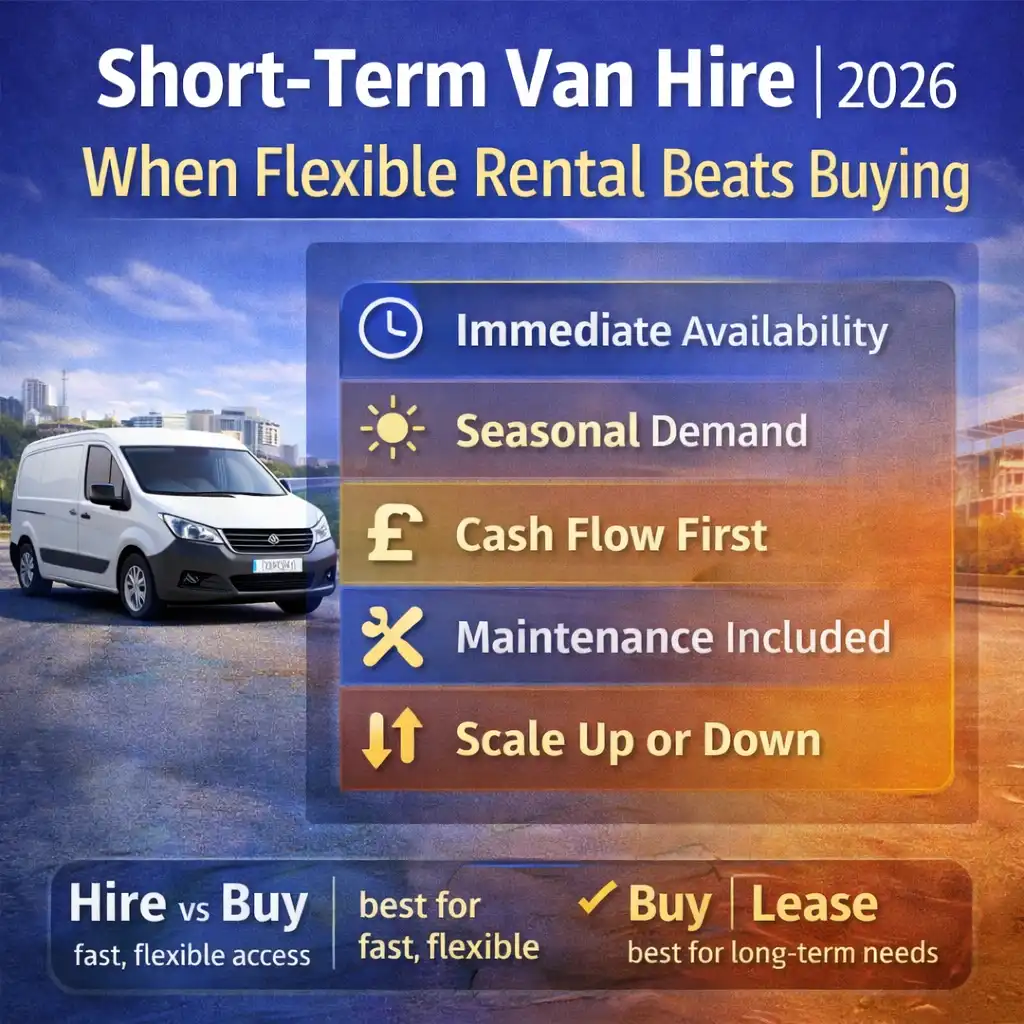
Van hire is a short to medium-term rental solution where you use a vehicle for a fixed period — typically from a single day up to several months. It’s ideal for businesses that need flexibility without long-term commitment. It’s commonly used for short contracts, seasonal demand, fleet cover, or when you need a van quickly.
What is Van Leasing?
Van leasing is a longer-term solution where a vehicle is supplied for a fixed contract period — often from 6 months up to 12 months or more — with a regular monthly payment. Leasing suits businesses that need consistent access to vehicles and want cost control without the depreciation risks of ownership.
Van Hire vs Van Leasing: Key Differences
| Feature | Van Hire | Van Leasing |
|---|---|---|
| Contract length | Days to months | 6–12 months+ |
| Flexibility | Very high | Moderate |
| Cost structure | Simple short-term pricing | Fixed monthly payments |
| Typical value | Best for urgent or temporary needs | Best for ongoing business use |
| Maintenance & servicing | Included (typical) | Included (typical) |
| Depreciation risk | None | None |
Which option is best for your business?
Choose van hire if:
- You need a van quickly for a short period
- Your workload is seasonal, project-based, or unpredictable
- You want maximum flexibility with minimal commitment
- You’re covering breakdowns, repairs, or vehicle downtime
Choose van leasing if:
- You rely on vehicles every day and want consistent availability
- You want lower monthly costs over a longer period
- You prefer predictable budgeting and fixed payments
- You want to upgrade to newer, more efficient vehicles more regularly
Why more businesses are choosing flexible van solutions in 2026
Many businesses are moving away from vehicle ownership in favour of flexible hire and leasing. Rising purchase prices, changing emissions rules, and the need to scale quickly have made flexibility essential. With hire or leasing, you can preserve cash flow, avoid depreciation, and adapt your fleet to suit the work you have now — not the work you had last year.
Van hire & leasing with Queensbury Van Hire
Queensbury Van Hire provides flexible solutions tailored to the way you work — from short-term hire to longer-term leasing and fleet support. Whether you need one van or an entire fleet, we’ll help you choose the most cost-effective setup with the flexibility to adapt as your business changes.
Van Hire vs Van Leasing FAQs
Quick answers to common questions businesses ask when choosing between short-term van hire and long-term van leasing.
Van hire is typically a short-term rental option (days to months), while van leasing is a longer-term agreement with fixed monthly payments (often 6–12 months or more). Hire offers maximum flexibility; leasing usually offers better long-term value and budgeting.
For short periods, van hire is often the most practical option because you only pay for what you need. For ongoing use, leasing can be more cost-effective due to lower average monthly costs over time and predictable payments.
It depends on your workload. If work is steady, leasing can help with cost control and fixed payments. If work is seasonal or you only need a van occasionally, short-term hire offers flexibility without long commitments.
Yes. Many businesses start with hire to test the right van size and setup, then move to leasing when the requirement is clear. This is especially useful when you’re expanding, onboarding new contracts, or replacing older vehicles.
In most business-focused packages, servicing and maintenance are included. This reduces downtime and helps you manage costs. If you’re comparing options, always confirm what’s included — especially maintenance, breakdown cover, and replacement vehicles.
Many growing fleets use a mix: leasing for core vehicles used every day, and hire for peak periods, new contracts, or temporary cover. This approach keeps monthly costs stable while maintaining flexibility when demand changes.