

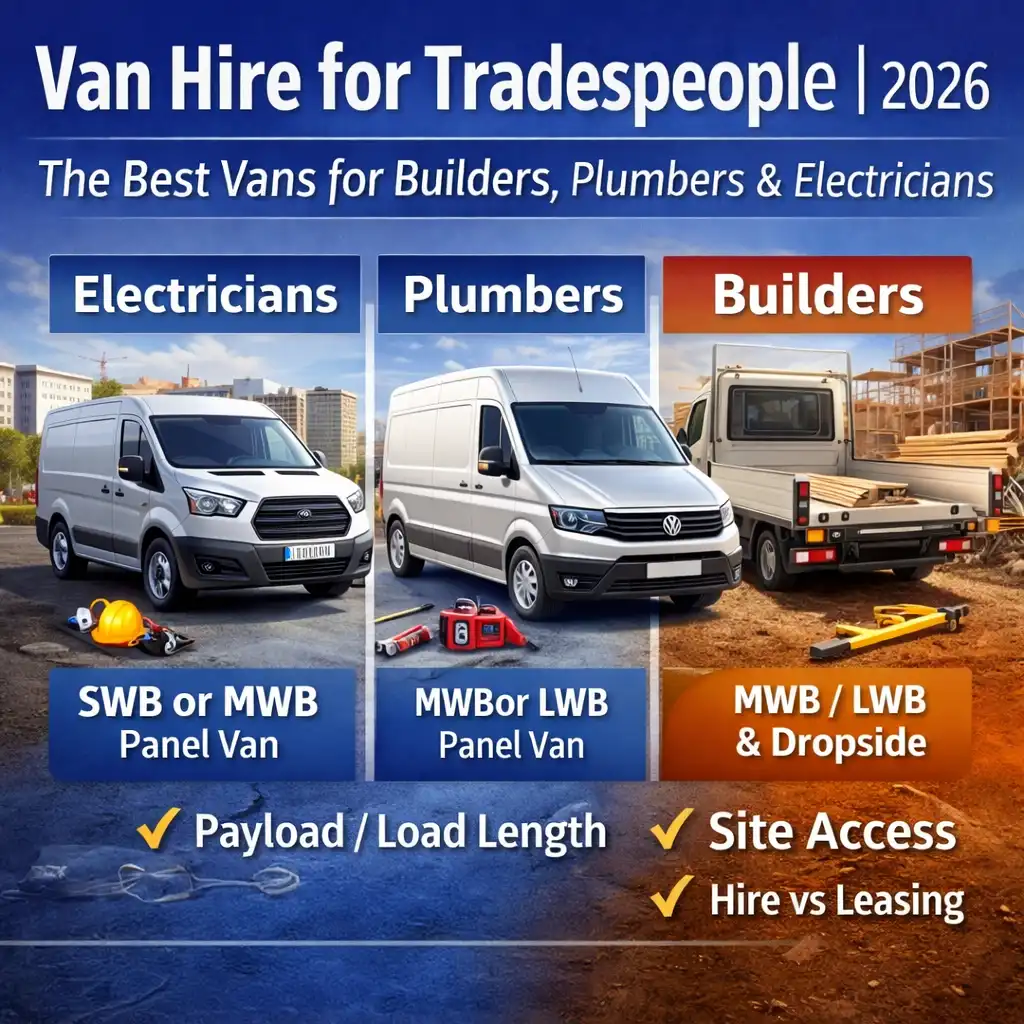
Van Hire for Tradespeople: The Best Vans for Builders, Plumbers & Electricians (2026)
For most trades, your van is more than transport—it’s a mobile workshop. The right vehicle helps you carry tools safely,
keep materials protected, reach tight sites, and stay productive without multiple trips. The wrong van can mean wasted time,
higher running costs, and awkward loading on site.
This guide breaks down the best van options for builders, plumbers, and electricians in 2026, including what each van type is
best for, what to consider (like payload and access), and when short-term hire or longer-term leasing is the smarter move.
If you’re unsure what to choose, a good rule is to book a van that fits your longest items comfortably while leaving room to secure
the load properly.
| Best Vans for Trade Work: Quick Recommendations |
|---|
Electricians: SWB or MWB Panel VanIdeal for tool storage, tidy cable management, and city access. Choose SWB if you’re working on tight streets or doing multiple call-outs. Choose MWB if you regularly carry ladders, longer conduit, or bulk fittings. Plumbers: MWB Panel Van (or LWB for larger installs)A strong all-round option for carrying fittings, pipework, and bulky kit while still being manageable to park. If you regularly carry longer lengths of pipe, boilers, or larger tool loads, consider LWB. Builders: MWB or LWB (and Dropside for materials)Builders often need extra payload and load volume for power tools, bags, boards, and site materials. MWB suits mixed work. LWB is better for bulk loads and fewer trips. For open loads and easy loading/unloading of heavy materials, a Dropside is often the best choice. Multi-Trade / Maintenance Teams: MWBIf you cover a bit of everything, MWB is typically the most practical balance of load space and day-to-day usability. It suits tools, spares, and moderate materials while staying easy to drive. |
What to Consider When Choosing a Trade Van
Before you hire or lease, these factors will help you choose the right van for your workload:
- Payload: Tools and materials add up quickly—especially for builders carrying heavy consumables.
- Load length: Ladders, pipe, conduit, timber, and boards often determine whether you need MWB or LWB.
- Site access: Tight streets, residential drives, and city parking can make smaller vans more efficient.
- Security: A panel van keeps tools out of sight and protected from weather and opportunistic theft.
- Loading method: Dropsides and larger vans can speed up loading—especially with bulky site materials.
- Frequency of use: Occasional projects suit hire; daily reliance often suits longer-term leasing.
Hire vs Leasing for Trades: Which Makes Sense in 2026?
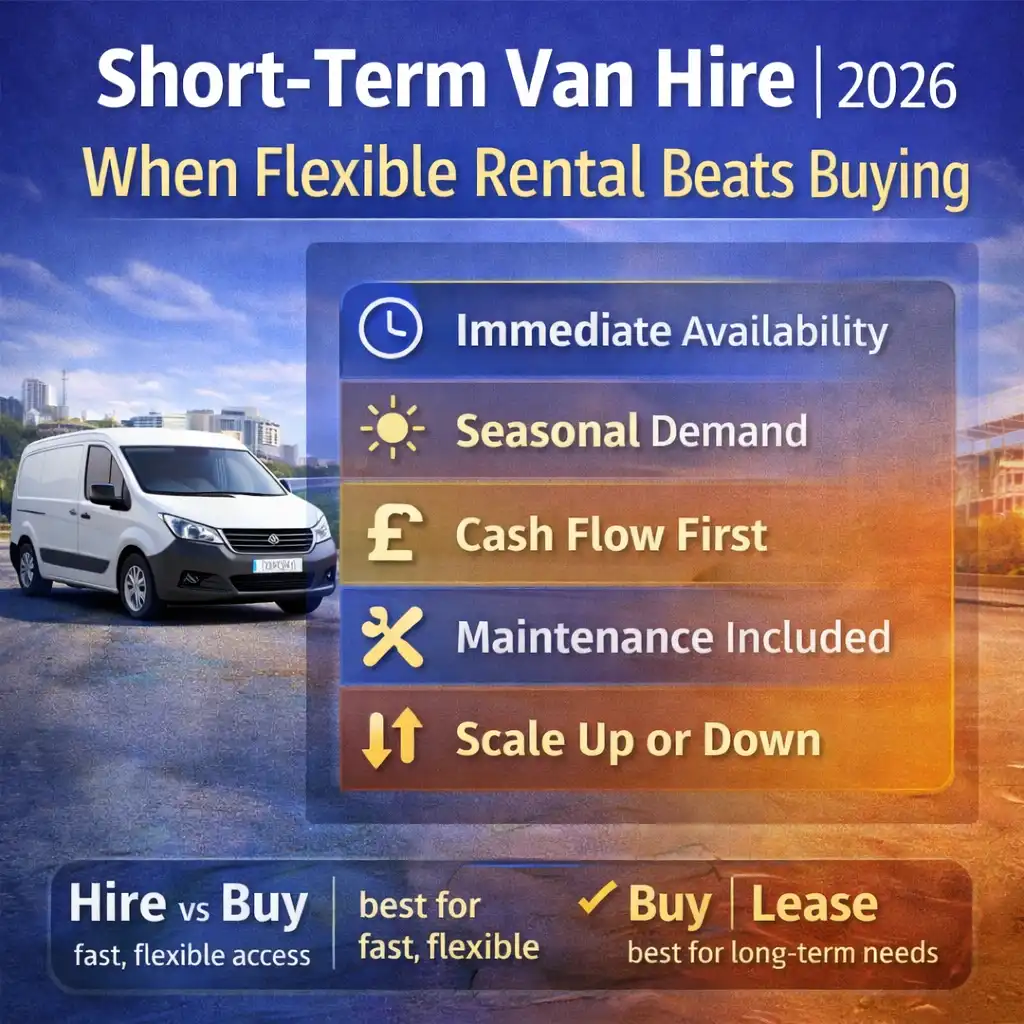
Short-term van hire is ideal when:
- You’ve won a new contract and need a vehicle quickly
- Your usual van is off the road or in for repairs
- You need a larger van temporarily (for a refit, big install, or site clearance)
- You want flexibility without a long commitment
Longer-term van leasing is ideal when:
- You need a van daily for regular work
- You want predictable costs and fixed payments
- You’re building a reliable fleet for a growing team
- You want access to newer vans without depreciation risk
Common Trade Van Mistakes to Avoid
- Choosing too small: Multiple trips cost time and fuel, and can disrupt your day.
- Overpaying for space you won’t use: If most of your work is local call-outs, SWB/MWB may be the smarter choice.
- Ignoring access constraints: Bigger isn’t always better if you work in tight residential streets or city centres.
- Not planning for safe load securing: Leave room to strap and organise tools and materials properly.
Trade Van Hire FAQs
Answers to common questions from builders, plumbers and electricians choosing a van for work.
Most electricians choose an SWB or MWB panel van. SWB is great for city access and quick call-outs. MWB offers extra space for longer items like ladders and conduit, while still being easy to drive.
A MWB panel van is a strong choice for most plumbers, offering room for fittings, tools, and bulkier kit. If you regularly carry longer pipework or larger installs, an LWB can make loading easier and reduce trips.
Yes. Dropside vans are ideal for builders moving materials that are awkward in an enclosed van. They make loading and unloading faster, especially for heavy site items and bulk materials.
If you need a van temporarily, have seasonal demand, or need cover fast, hire is usually best. If you rely on a vehicle daily and want predictable monthly costs, leasing often makes more sense long-term.
Many small teams choose MWB as an all-rounder. If you carry higher volumes of tools and materials or want fewer trips, LWB is often more practical—especially for larger sites and longer materials.
Think about your longest items (ladders, pipe, boards), typical load volume, and where you park on the job. If you’re still unsure, contact Queensbury Van Hire and we’ll recommend a suitable van based on your work and route.