

Short-Term Van Hire for Businesses: When Flexible Rental Beats Buying (2026)
Buying a van can feel like the “proper” business decision—but in 2026, it’s often not the most cost-effective or flexible option.
Vehicle prices remain high, business needs change quickly, and downtime can cost more than the van itself. That’s why many companies
now choose short-term van hire as a practical alternative to ownership.
Short-term business van hire gives you a vehicle when you need it, without tying up cash, taking on depreciation risk, or committing
to years of ownership. It can also be a smart way to manage growth: keep your core fleet stable, then hire extra vans during peak
demand or when new contracts land.
In this guide, we’ll explain exactly when flexible rental beats buying, what to look for in a business hire package, and how different
industries use short-term hire to stay efficient and profitable.
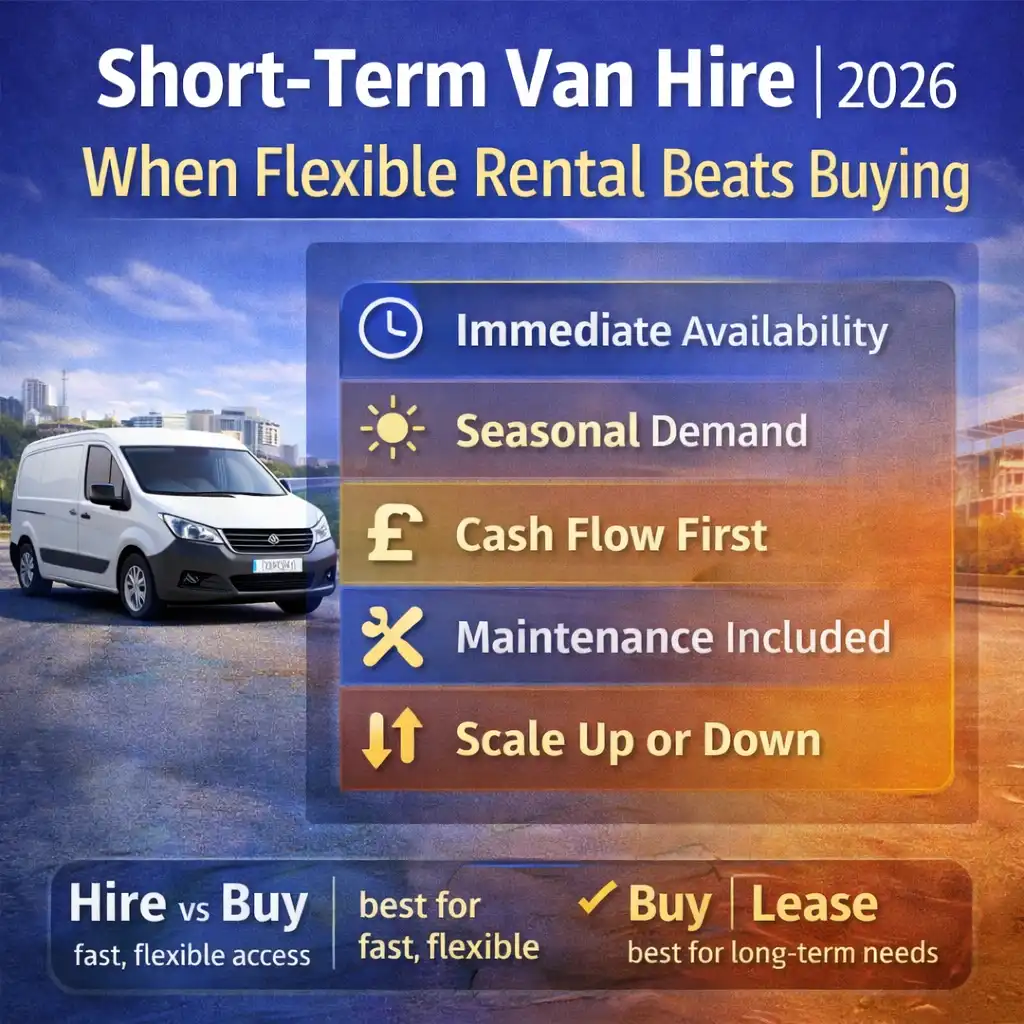
| When Short-Term Van Hire Beats Buying: The Quick Checklist |
|---|
1) You need a van fast (immediate availability)Winning a contract, onboarding a new driver, or covering a breakdown often means you can’t wait weeks. Short-term hire lets you get on the road quickly and keep earning. 2) Your workload is seasonal or unpredictableIf demand peaks at certain times of year (construction phases, promotions, courier peaks), buying a van you don’t need year-round can be wasteful. Hire gives you the right capacity only when you need it. 3) Cash flow matters more than ownershipPurchasing ties up capital that could be used for stock, staff, marketing, tools, or growth. Short-term rental helps preserve cash while keeping vehicles available. 4) You want predictable costs with fewer surprisesA strong hire package can include servicing, maintenance and breakdown support. This reduces unexpected repair bills and helps you budget more accurately month to month. 5) You need the flexibility to scale up or downHiring is ideal when you’re trialling a new route, expanding a team, or testing vehicle sizes. If things change, you can adjust quickly—without being stuck with a vehicle you no longer need. |
Real-World Examples: Who Benefits Most from Short-Term Business Van Hire?
Trades & Construction:
- Covering peak phases of a job or extra labour on site
- Hiring a larger van temporarily for materials or equipment
- Keeping work moving while a vehicle is in the workshop
Couriers & Logistics:
- Scaling capacity for peak delivery periods
- Adding vehicles quickly for new contracts or routes
- Reducing downtime with reliable support and replacement options
Service Businesses & SMEs:
- Short-term projects, events, or temporary roles
- Testing fleet requirements before moving to long-term leasing
- Keeping capital free for business priorities
What to Look for in a Business Van Hire Package
If you’re comparing providers, focus on total value—not just the headline price:
- Maintenance and servicing included: reduces downtime and avoids surprise costs
- 24/7 breakdown and recovery: essential if your van is how you earn
- Replacement vehicle options: helps protect revenue when something goes wrong
- Flexible terms: the ability to extend, swap, or change vehicles as your needs evolve
- Vehicle suitability: correct size, payload, and configuration for your job
Hire vs Buying vs Long-Term Leasing: The Simple Way to Decide
Short-term hire is best when you need flexibility, fast availability, and minimal commitment.
Buying is best when you have stable long-term needs, the capital available, and you can manage maintenance and depreciation.
Long-term leasing is best when you need a dedicated vehicle for ongoing work and want predictable monthly payments without ownership risk.
Short-Term Business Van Hire FAQs
Quick answers to common questions about short-term van hire for businesses in 2026.
Short-term hire usually means hiring a van for days, weeks, or a few months—without a long contract commitment. It’s ideal for temporary needs, new projects, seasonal demand, or vehicle downtime.
For ongoing daily use over years, buying can be cheaper in some cases—but it brings depreciation and maintenance risk. Short-term hire is often better value when you need flexibility, quick access, and predictable costs without long commitments.
If you need a dedicated vehicle consistently and want lower average costs over time, long-term leasing can be a better fit. Many businesses use hire for peaks and leasing for their core fleet.
Many business hire packages include maintenance and breakdown support, but inclusions vary. Always confirm what’s covered, especially if you rely on the van to earn every day.
In many cases, yes—short-term hire is designed to be flexible. If your job is extended, you can often extend the hire term or switch to a longer-term arrangement depending on availability.
Have your required van size/type, expected hire duration, estimated mileage, and usage type ready. This helps secure the most suitable vehicle and the most cost-effective hire option.