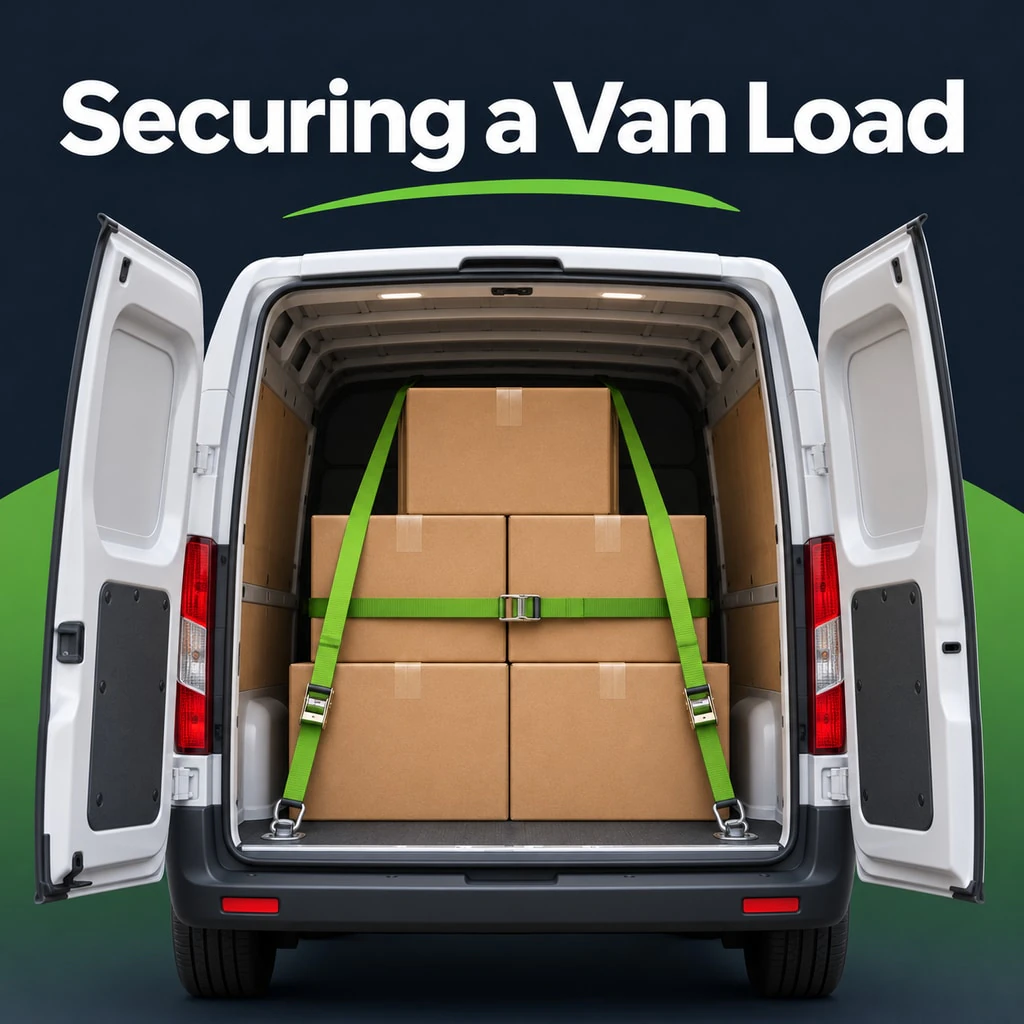
Secure a van load so it cannot shift during normal driving, braking or a change of direction. Closing the rear doors is not a load-restraint system. Before hiring, work out the weight and shape of the goods, how they will be restrained and how they will be unloaded at the destination.
This guide is for planning ordinary goods and household moves. Unusual, hazardous or especially heavy loads need competent, load-specific advice. The government’s van-loading guidance explains the importance of total weight, axle limits and securing goods.
Start with weight, space and restraint points
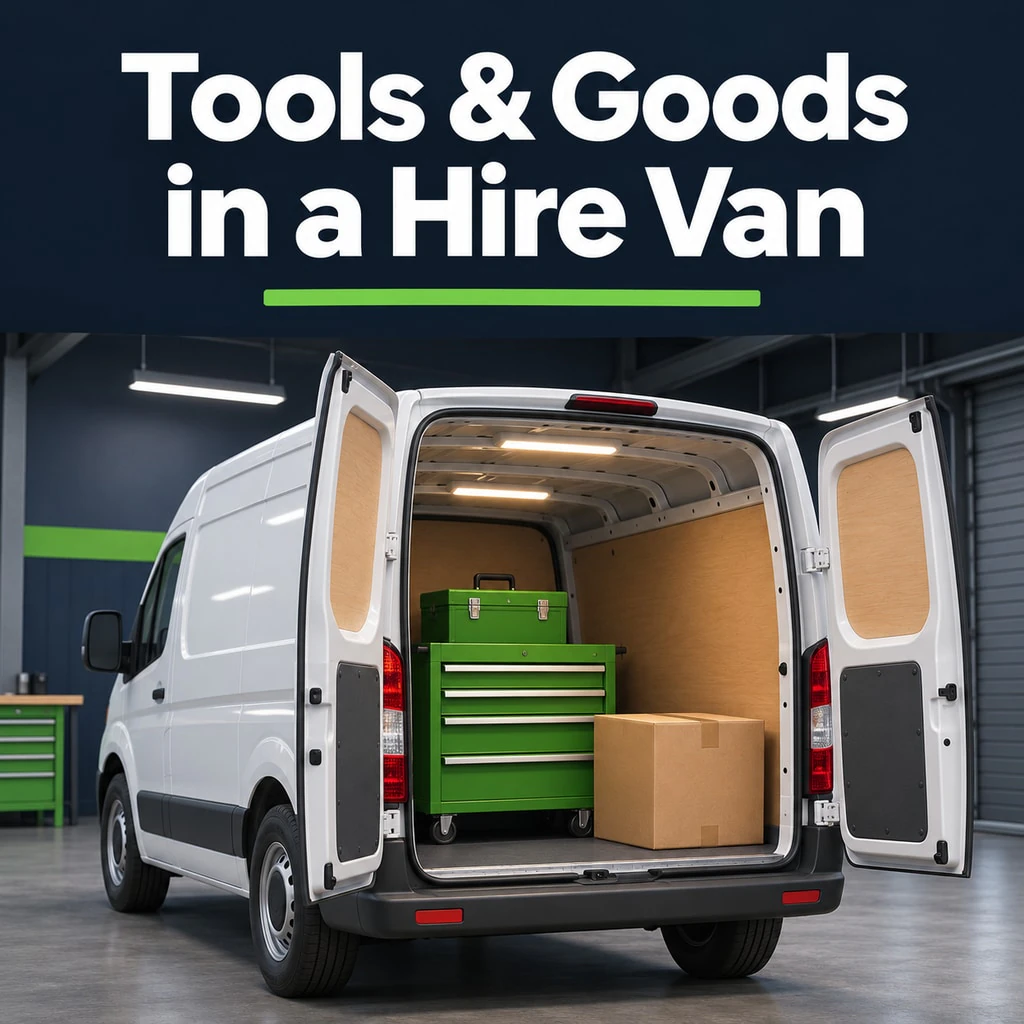
Make a load list rather than booking from a photograph. Include packaging, pallets, tools and any handling equipment travelling in the van. The available space and the permitted weight are separate checks: a dense load can exceed a limit while much of the body remains empty.
Use the van-size guide to narrow the category, then confirm the actual vehicle’s payload, door opening and suitable anchor points with the hire team. Compare large vans and Luton vans by the job, not just the larger-looking body.
What does each loading aid actually do?
| Item or feature | Useful role | What to check |
|---|---|---|
| Rated straps and suitable anchor points | Restrain an appropriate load when correctly selected and used. | Ratings, condition, compatibility, attachment points and the method for this load. |
| Compatible load bars or internal systems | Can help control movement in a system designed for the vehicle and goods. | Fit, limits and operating instructions; do not improvise with an unsuitable bar. |
| Blankets and protective wrapping | Protect finishes and separate surfaces. | They do not, by themselves, secure furniture or heavy boxes. |
| Pallet wrapping | Helps keep suitable goods together as a unit. | The unit still needs a suitable securing method inside the vehicle. |
| Bulkhead and closed doors | Separate areas and contain the load space. | Do not assume they are rated to restrain an unsecured load. |
| Sack truck or pallet truck | Helps move a suitable load during handling. | Its own weight, restraint in transit and safe use at both ends. |
Ask what equipment is actually supplied and what you must arrange separately. Do not assume straps, blankets, a pallet truck or a helper are included in a booking. Damaged or unlabelled equipment should not become the solution because loading has already started.
Plan the unloading before the loading
Check where the van can stand, the surface underfoot, pedestrian movements and the route into the building. A forklift at collection does not solve a delivery address without one. A tail lift also needs suitable ground, competent operation and enough capacity for everything on the platform.
The HSE’s loading and unloading advice is a useful starting point for workplace arrangements. If a heavy item cannot be handled safely at either end, change the method or arrange suitable help before booking. Use the moving-van service page to discuss the vehicle requirement, without assuming a self-drive booking includes removals labour.
A loading sequence you can adapt to the job
- Inspect the empty body. Look for damage, debris and usable securing points. Keep the cab and footwell clear.
- Agree the layout. Consider weight distribution, access to restraints and the order of stops. Do not concentrate heavy goods on one axle or one side.
- Load and restrain progressively. Keep heavy items low where suitable, protect vulnerable surfaces and avoid unsupported stacks.
- Secure the equipment too. Loose handling aids and spare materials can move just like the main goods.
- Check before moving. Doors must close properly; nothing should obstruct the driver or rely on a door to hold it in place.
This is a planning sequence, not a universal lashing design. The right number and arrangement of restraints depends on the load, equipment and vehicle. If you cannot establish a suitable method, obtain advice rather than guessing.
Example: furniture and boxes with two unloading stops
Imagine a cupboard, boxed belongings and a sack truck travelling to two addresses. The cupboard needs appropriate restraint, boxes need a stable arrangement and the truck needs its own secure position. The items for the first stop should be accessible without dismantling the restraint holding the second load.
After the first delivery, stop and reassess. An empty gap can let boxes move; a strap that previously held several pieces may no longer hold the remaining item. Rebuild the restraint as needed before setting off again. This is why “it was secure when we left” is not enough for a multi-stop journey.
Pallets and equipment need an extra check
The DVSA’s guidance on different load types distinguishes securing goods to a pallet from securing that unit to the vehicle. Do not accept a damaged pallet or treat wrapping as a substitute for proper restraint. Tell QVH the dimensions, total weight and handling arrangements before selecting a van.
Frequently asked questions
No. They protect surfaces but are not a substitute for a suitable restraint system. Plan how the item will be held against movement and check the vehicle’s compatible securing points.
No. Do not assume a bulkhead or closed door is designed to hold an unsecured load. The goods still need an appropriate securing method.
No. Confirm which points are intended for restraint and their limits. Do not attach straps to trim, door fittings or unverified points.
Yes. Removing goods can leave gaps or change how a restraint works. Check the remaining load and loose equipment before continuing.
Not necessarily. A larger body does not guarantee a higher usable payload. Confirm the actual vehicle’s total and axle limits as well as its dimensions.