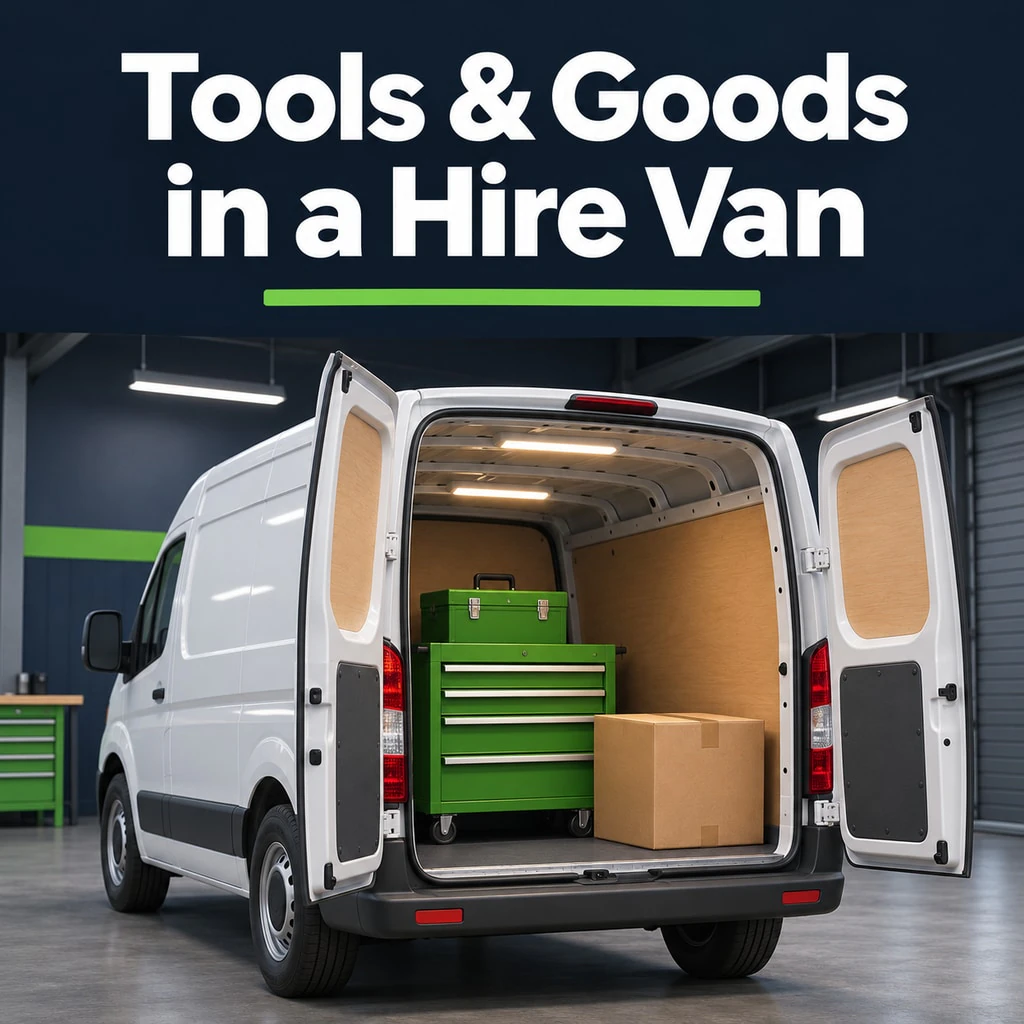
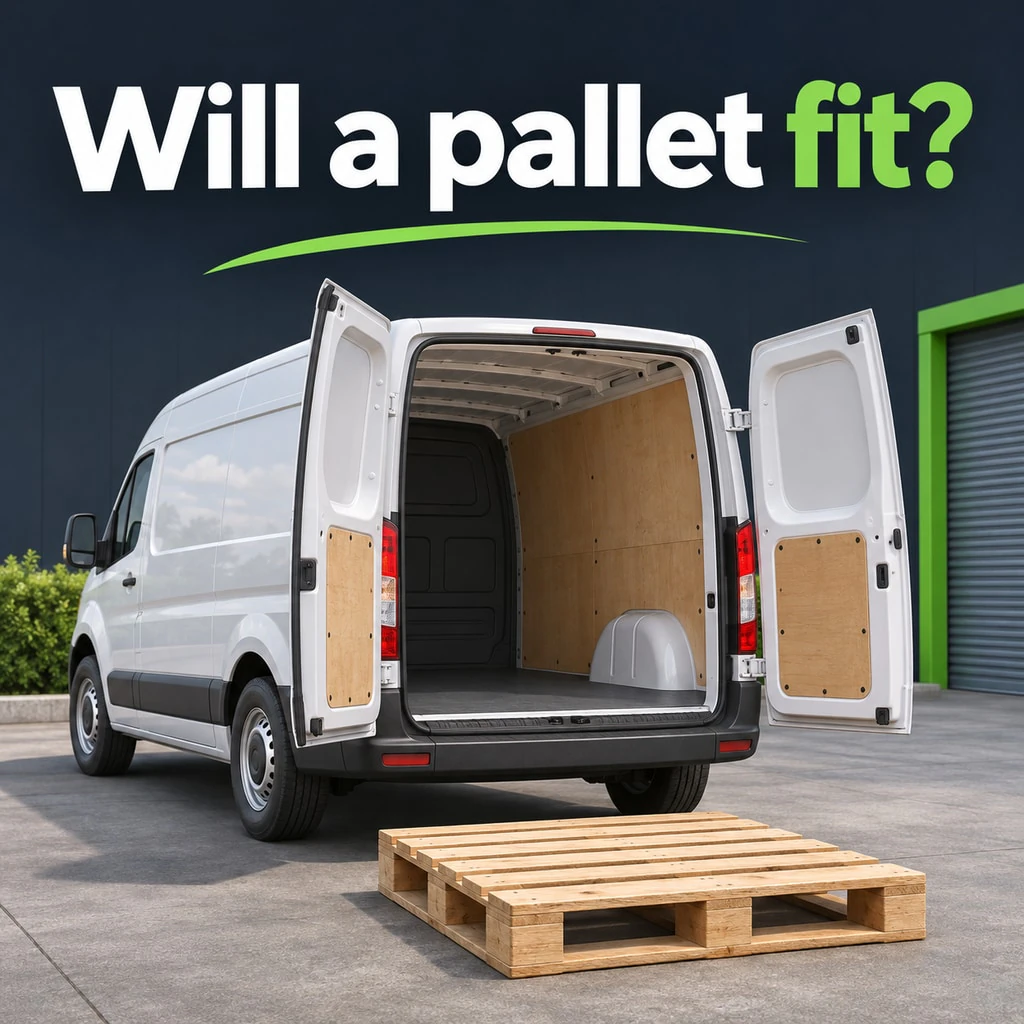
A pallet fits a van only when the complete load can pass through the door, sit in a suitable position, remain within the vehicle’s weight limits and be secured. It also has to come out safely at the other end. “One pallet” is not enough information to select the vehicle.
Start with the pallet’s footprint, the packed height and the gross weight including the pallet. Then compare the actual allocated van. A model name or an advertised body volume is a starting point, not confirmation that your load will fit.
Common pallet footprints
| Pallet type | Nominal footprint | What still needs measuring |
|---|---|---|
| EPAL Euro pallet | 1,200 × 800 mm | The loaded width and length, including wrapping or overhanging goods. |
| CHEP UK standard pallet | 1,200 × 1,000 mm | The full packed height and gross weight; the base size does not describe the load. |
These dimensions come from EPAL’s Euro pallet specification and CHEP’s UK pallet specification. Other pallet types exist. Ask the supplier for the actual dimensions rather than assuming every “standard pallet” has the same footprint.
A pallet’s own working-load rating is not a van payload rating. The vehicle can reach its permitted limit long before the pallet reaches its rated capacity.
The six checks that decide whether it works
| Check | Information to obtain | Why it matters |
|---|---|---|
| Loaded dimensions | Maximum packed length, width and height. | Goods and packaging can extend beyond the base. |
| Door opening | Usable rear-door width and height. | A load can fit inside the body but fail to pass through the entrance. |
| Floor and wheel arches | Usable floor length, width between arches and intended position. | The widest internal dimension may not exist at pallet-floor level. |
| Gross load weight | Pallet, goods, wrapping and handling equipment. | Space does not establish a safe or legal payload. |
| Restraint | Suitable points, equipment and access to secure the load. | A pallet that fits tightly still needs a safe restraint plan. |
| Handling at both ends | Forklift, tail lift, pallet truck, ground and site access. | Loading successfully does not guarantee safe unloading. |
Use the van-size guide for the wider category comparison. For a pallet enquiry, send the six checks above to the hire team rather than asking only for a short- or long-wheelbase van.
Panel van or Luton: compare the loading method
A large panel van may suit a load with the right door clearance and handling arrangements. A Luton van may offer a different body shape or a tail-lift option. Neither description guarantees a particular pallet count or usable payload.
For a tail lift, check the platform dimensions, rated capacity and operating instructions for the allocated vehicle. Everything carried on the platform contributes to its load, including handling equipment and anyone permitted to be on it. Do not assume a lift can handle a pallet because the van can carry the weight in transit.
The tail-lift guide explains the questions to ask before booking. If there is no safe handling arrangement at the destination, organise one rather than relying on manual lifting when you arrive.
Example: a pallet that fits the footprint but fails the job
A supplier says a consignment is on a Euro pallet. You confirm the 1,200 × 800 mm base, but the goods overhang one side and extend above the usable rear-door opening. The base measurement alone would have produced the wrong booking.
Even if the loaded unit clears the door, the job can still fail if its weight is unknown or the receiver has no equipment to unload it. Resolve those questions with the supplier and receiver first. Repacking, using suitable handling equipment or choosing a different vehicle may be necessary.
Do not confuse a 3.5-tonne van with 3.5 tonnes of goods
The plated maximum covers the loaded vehicle, not just the cargo. People, fuel and equipment use part of that allowance. Individual axle limits also matter. The government’s van-weight guidance explains the distinction and points to a weighbridge when a weight check is needed.
There is no honest universal answer to “how many pallets fit in a Transit?” Body version, loaded dimensions, weight distribution and handling differ. Confirm the actual specification and load plan, especially when several dense pallets are involved.
Secure the goods and the pallet as a unit
Wrapping can help keep appropriate goods together, but it does not attach the unit to the van. Follow a competent restraint plan for the actual goods, pallet and anchor points. Keep space to inspect the arrangement and secure any pallet truck or loose equipment travelling with it.
For repeat pallet movements, discuss the pattern through fleet van hire: typical weights, loading sites and frequency are more useful than a single example. Availability and suitability still need confirming before a booking.
Frequently asked questions
The common EPAL Euro footprint is 1,200 × 800 mm; the CHEP UK standard footprint is 1,200 × 1,000 mm. Measure the loaded unit because goods or packaging can overhang either base.
Possibly, but check the actual usable door opening, the loaded dimensions and a safe loading method. Do not assume the side opening matches the width of the body.
Only if the resulting position, handling method, restraint and weight distribution are suitable. A footprint that fits on a sketch does not establish that it can be loaded safely.
It can provide a different loading method, but suitability depends on the lift, load, ground and handling equipment. Confirm both collection and destination arrangements before hiring.
Send the number of pallets, packed dimensions, gross weights, photographs if useful, collection and delivery-site access, available handling equipment and the hire dates. Do not substitute a pallet count for a weight.